All projectsLGR Technologies
Two MLTS units standing on their legs in a dark, smoke-filled space, lit from behind.

MLTS 2.0

Mobile Lightweight Tactical Sensor

The MLTS is a mobile radar sensor made for securing perimeters, targeting military use cases. I worked on the industrial design of the enclosure along with the core team at LGR Technologies. It is a fairly complex product with a lot of integrated electronics and mechanisms.

The design problem was not the housing itself. It was that a folding tripod, a swappable battery, a radar module, electronics, waterproofing, a sealed interface and more all had to occupy the same small volume, survive harsh conditions, and still be operable by one person in gloves. Every decision below is a consequence of that. It is still not a perfect prototype, but we have come a long way since the starting point.

Company
LGR Technologies
Role
Industrial designer
Product
Mobile Lightweight Tactical Sensor
Scope
Enclosure, mechanism, interface, production

The brief

01Robust
It is carried in a case, dropped, and left out in whatever weather arrives. Nothing on it should be the part that breaks.
02Set up anywhere
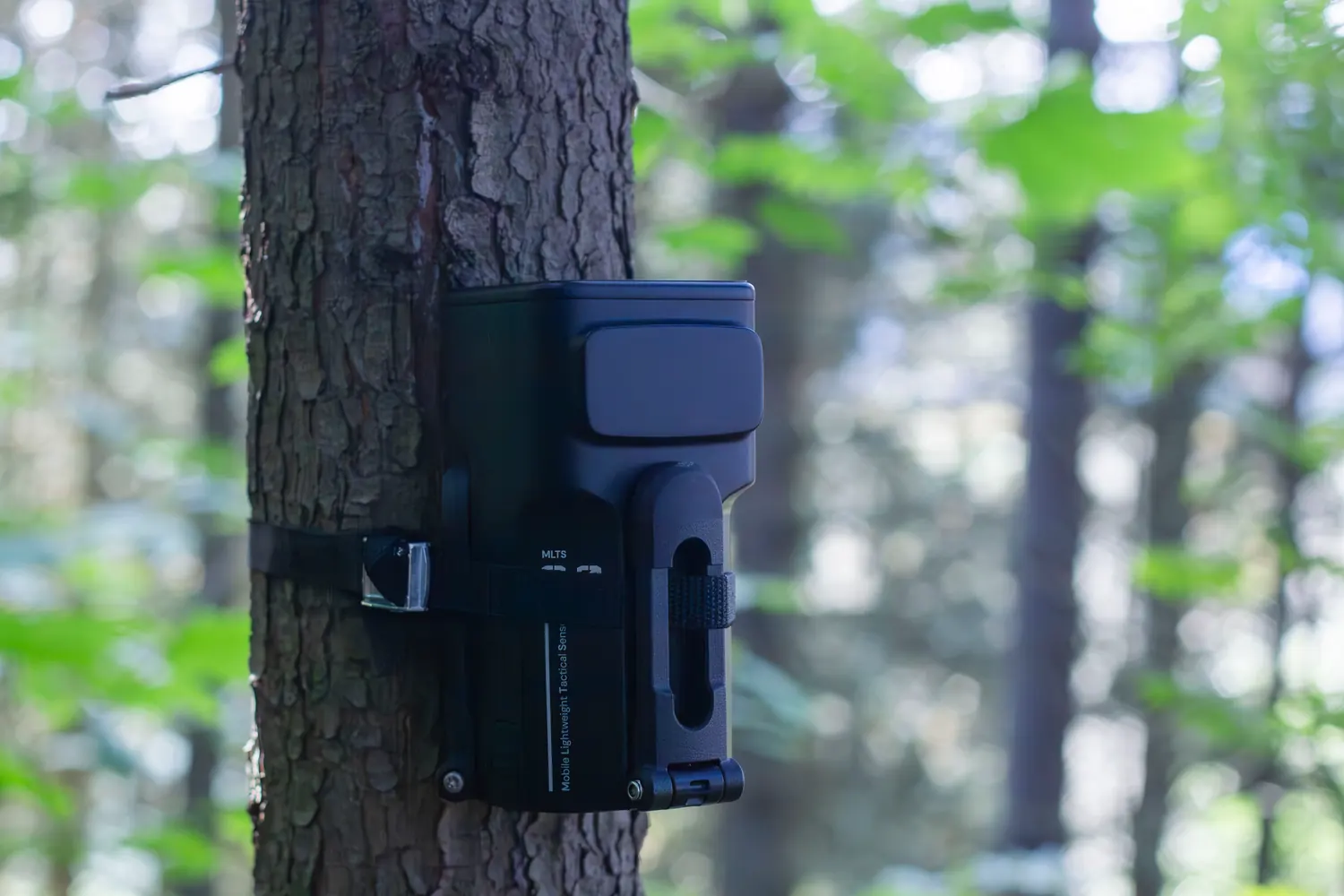
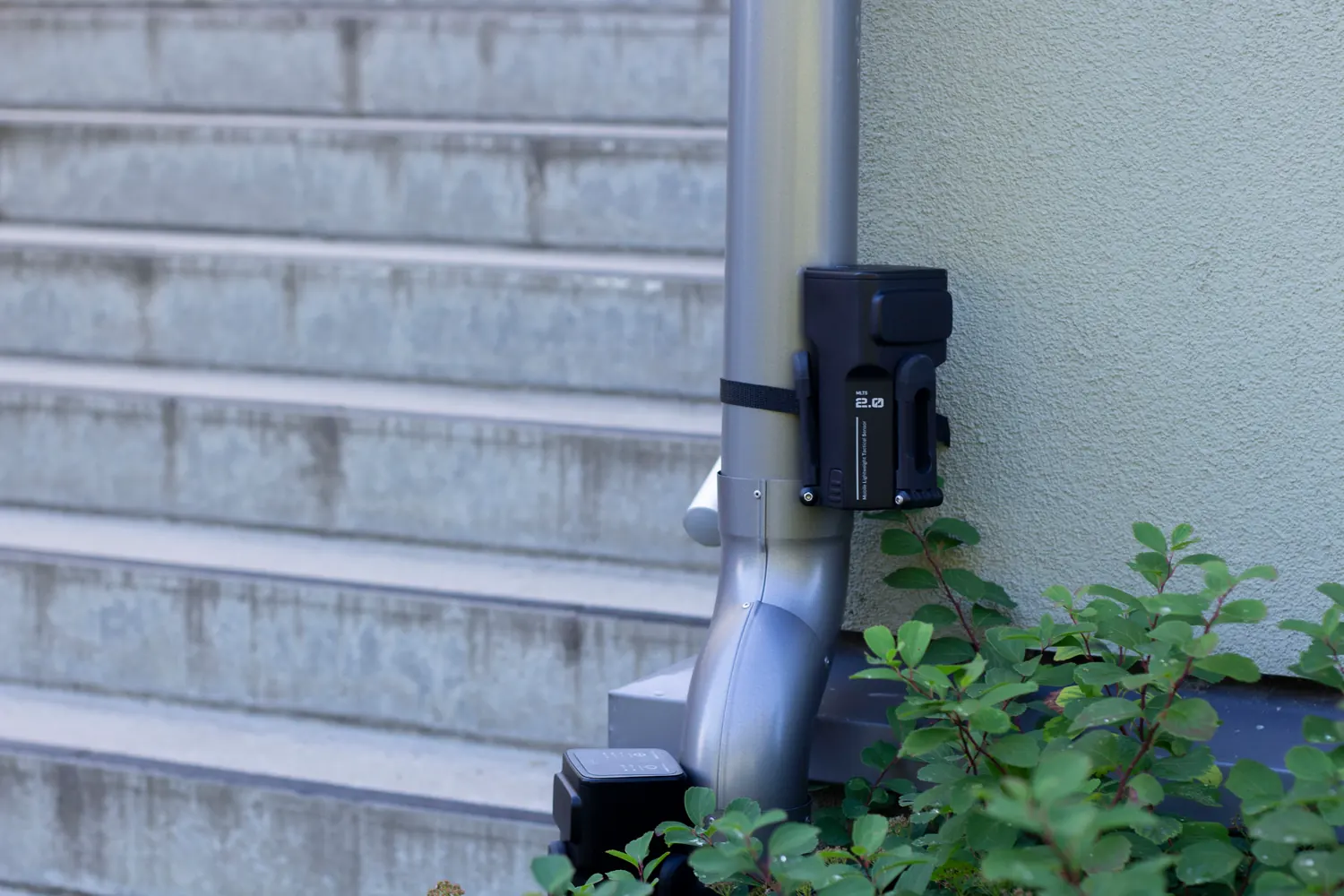
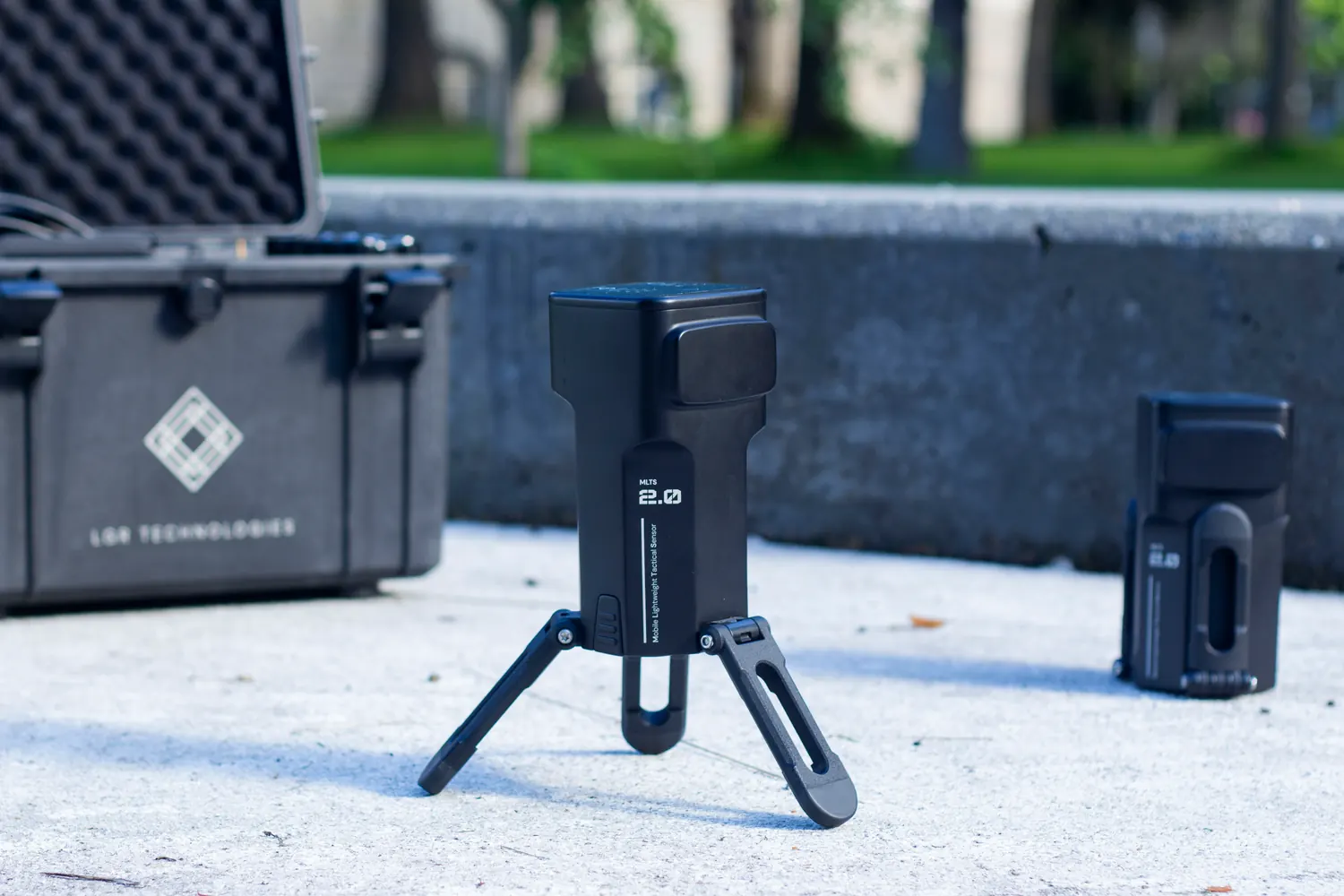
Stood on uneven ground or strapped to whatever is there, by one person, without tools.
03Simple to use
Operated in gloves, in the dark, by someone who has other things to think about.
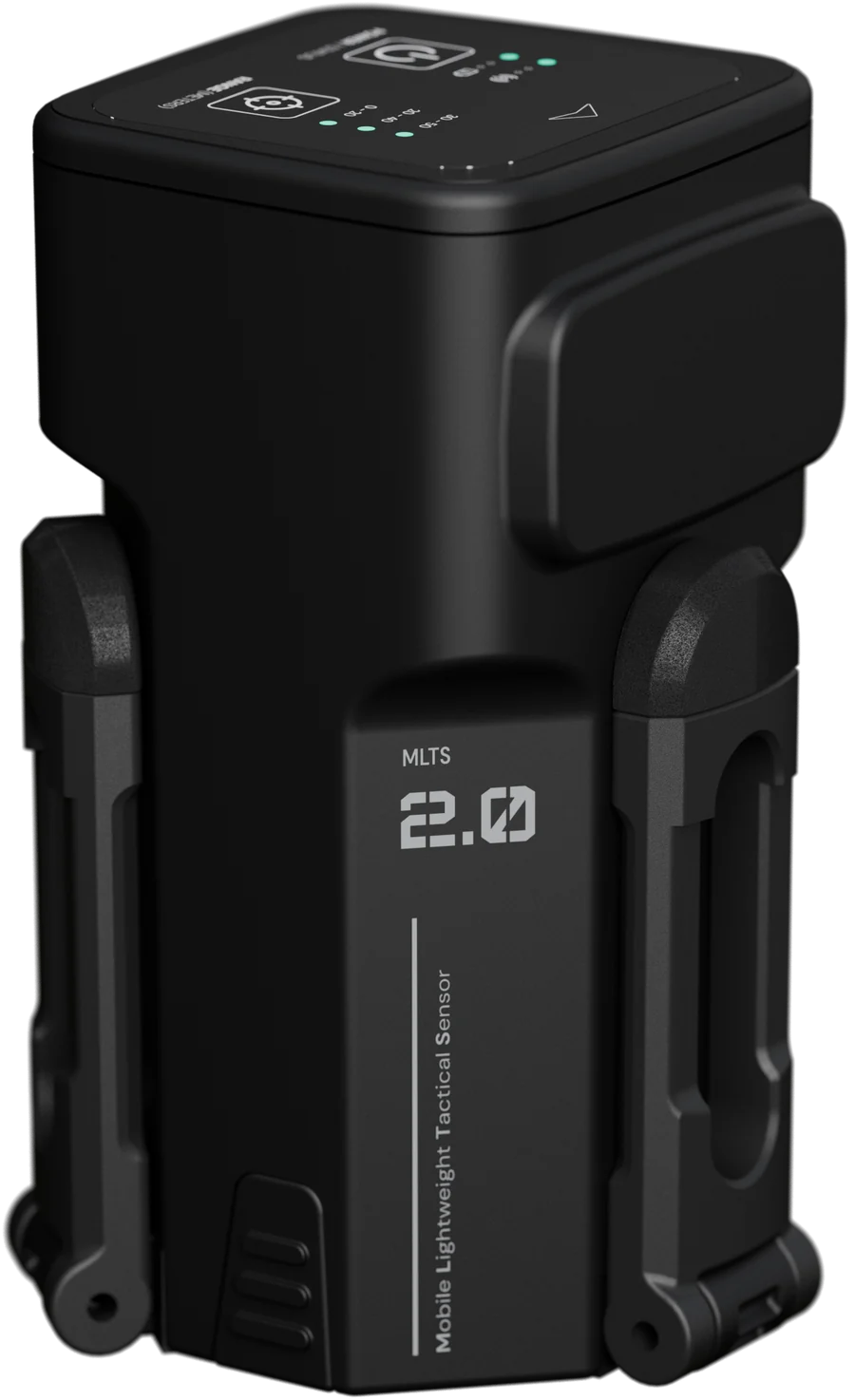
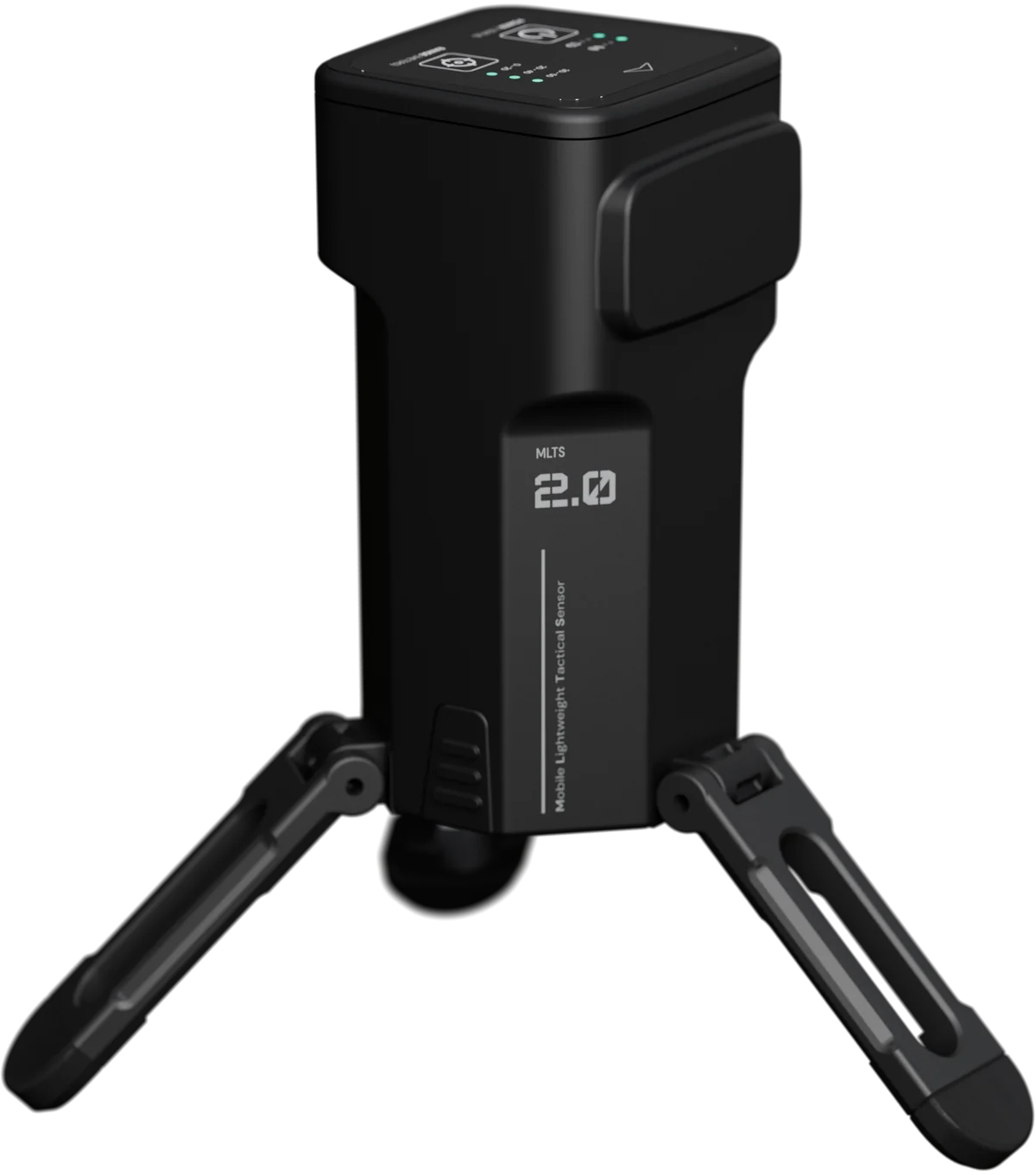
The MLTS on its three legs, seen from the front three-quarter.

Development

Even though I started with a functional first prototype, I decided to question every assumption from the beginning to see which features were really necessary. There was a lot of back and forth on the leg arrangement and the form, and on how to solve the swappable battery.

The development is easier to trust as a set of mechanisms than as a sequence of sketches, so it is written that way. Each of these went through several rounds before it was something you could hand to an operator.

Not all of it can be shown. The electronics, the radar integration and much of the internal design are confidential, so what follows is the mechanical and physical side of the work.

01

Deploy anywhere

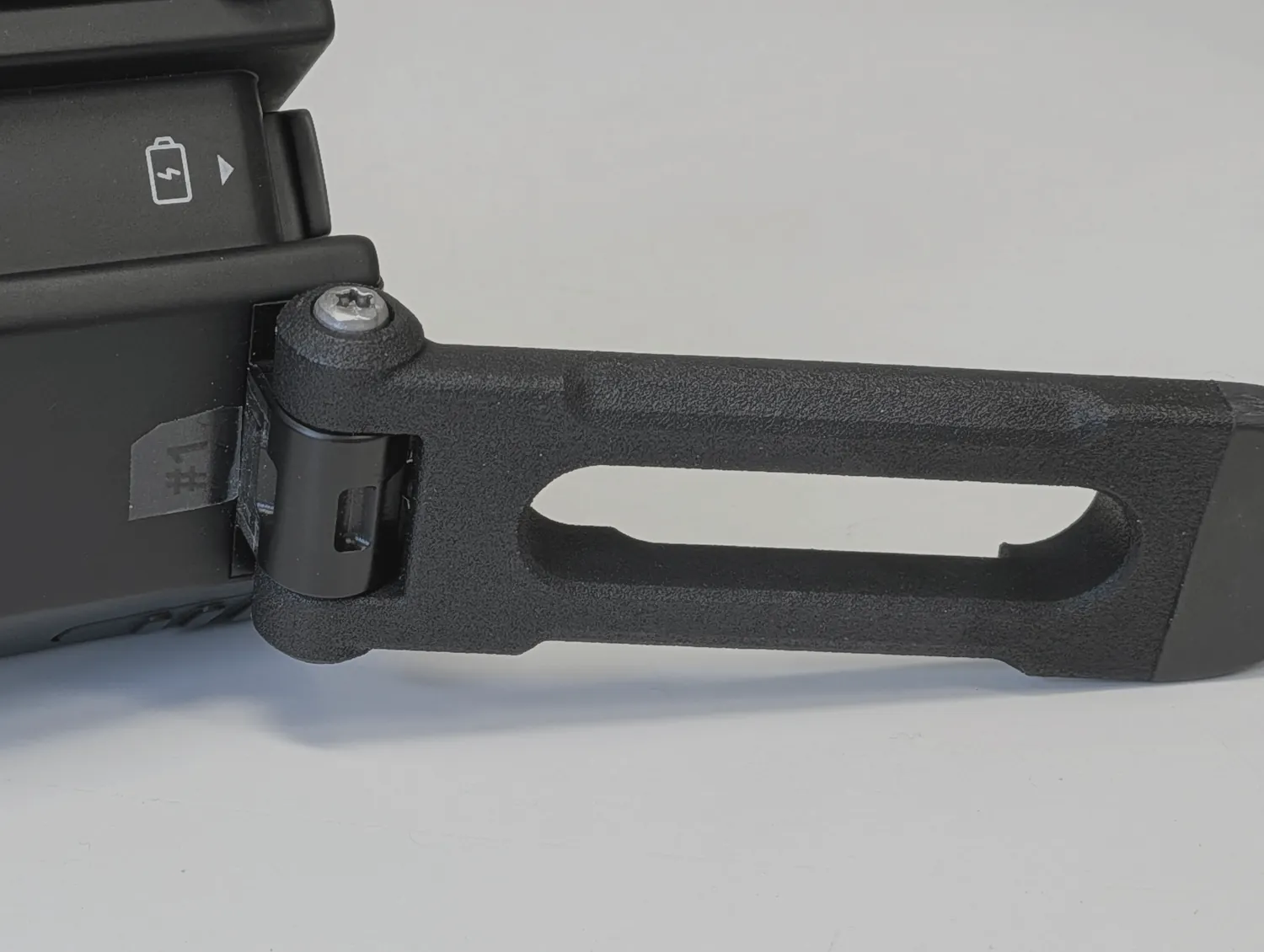
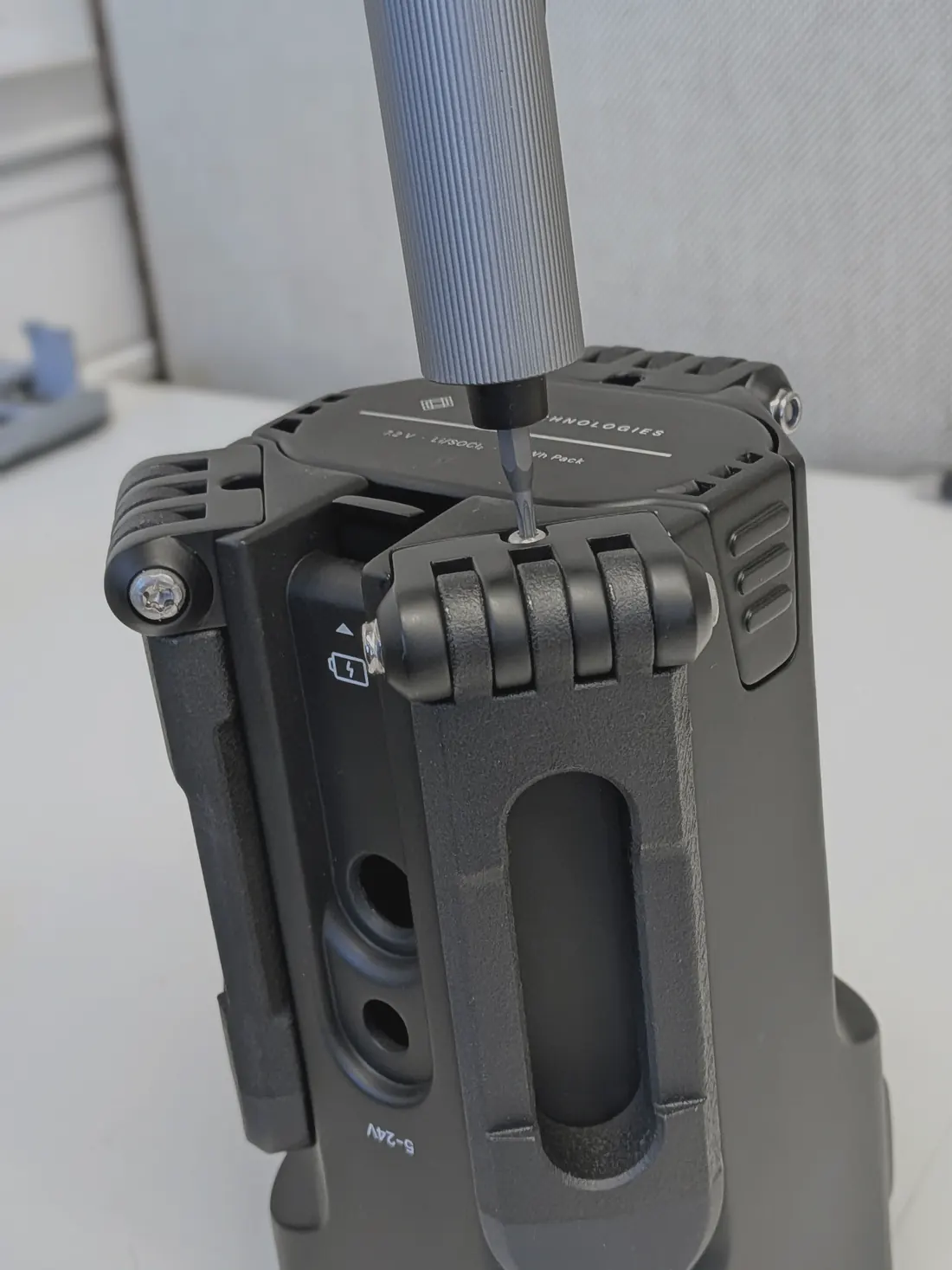
The hinge went through the most iterations of anything on the device. The geometry has to hold the unit level on rock and roots, and still fold in against the body tightly enough that several units stack into one case.

The legs are overmoulded in rubber, so the part that meets the ground and the part that meets the housing are the same component.

The MLTS with its legs folded flat against the body for transport.

Stowed

The same unit with its three legs swung out and standing.

Deployed

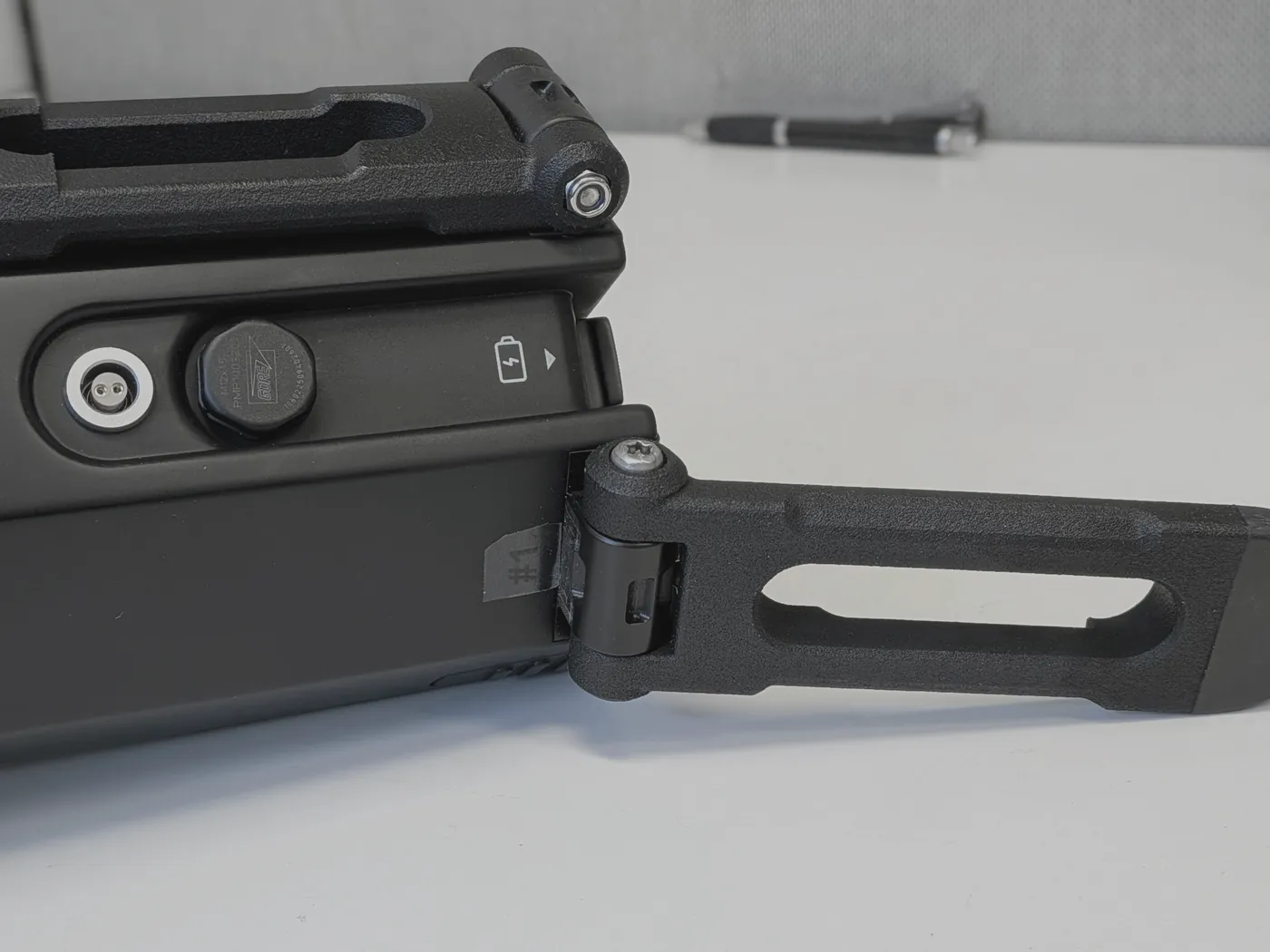
Close-up of the built hinge: the screw, the knuckle and the overmoulded leg swung out.A screwdriver driving the hinge screw on a printed prototype.

02

Swappable battery

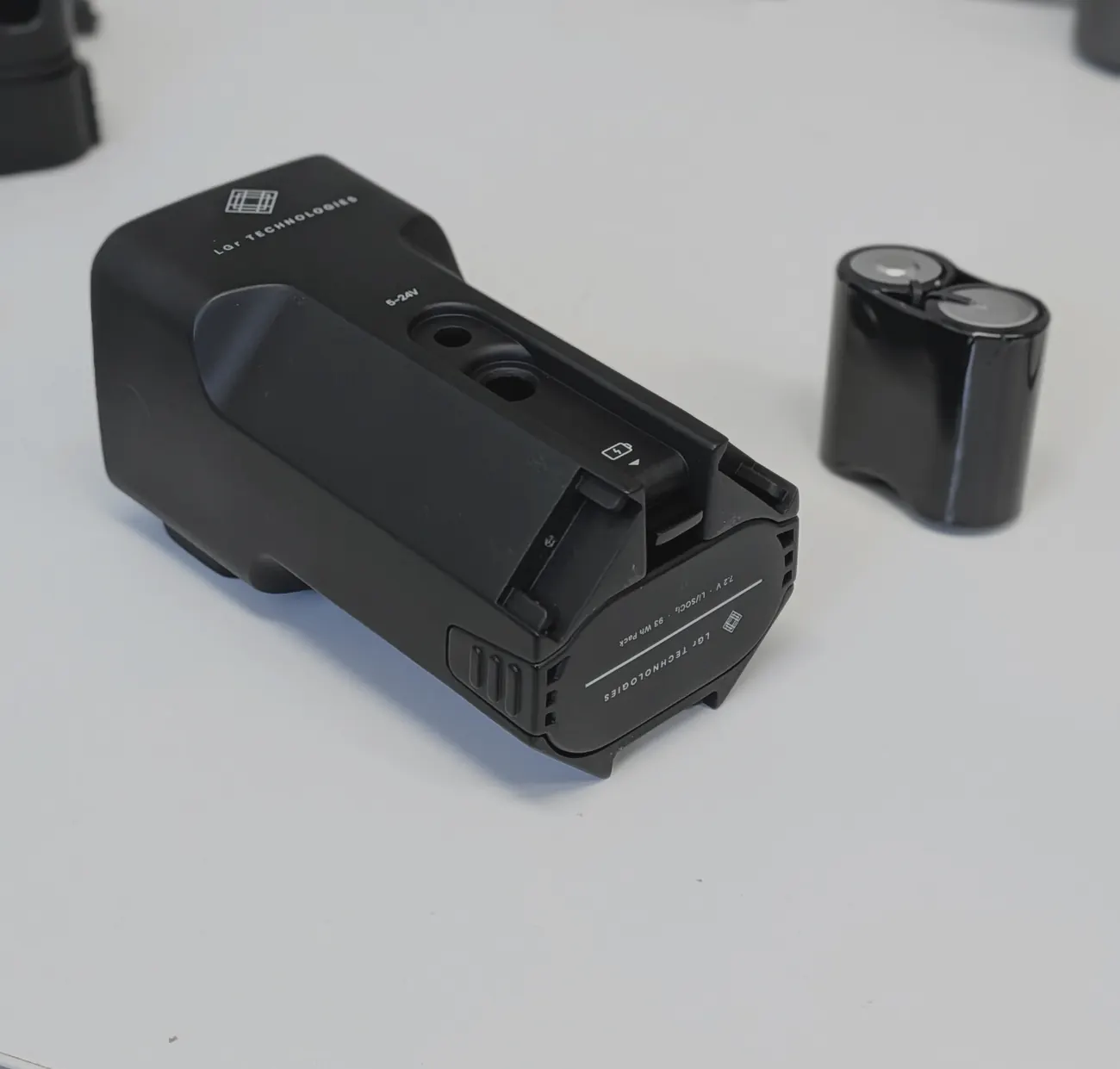
A swappable battery was deemed necessary to minimize downtime. The battery will be removed in the dark, in the cold, with gloves. It had to come out fast and easy in the field while staying watertight. We explored a lot of different mechanisms and principles: fully enclosed, loose cells, rechargeable only.

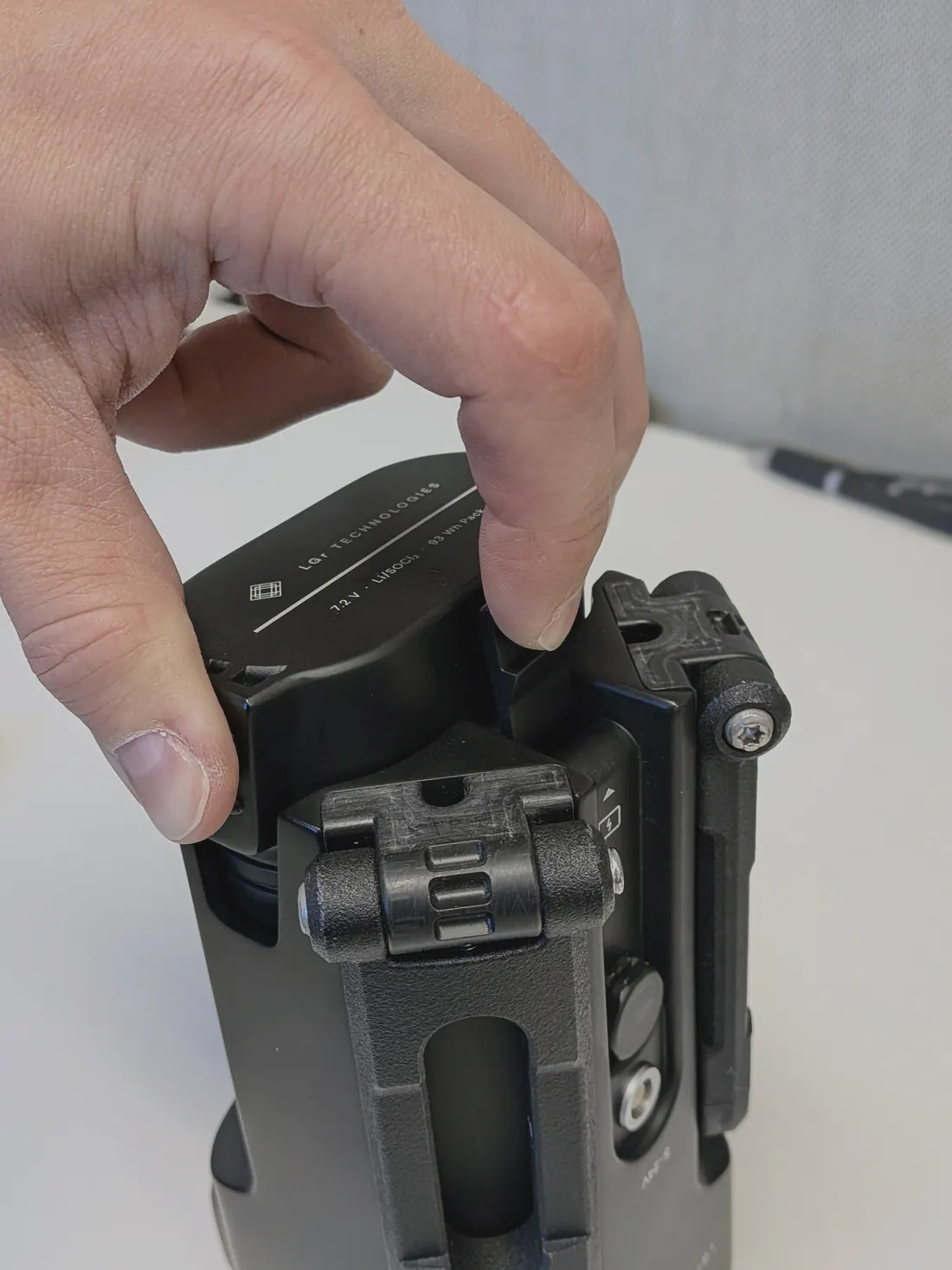
The latch is moulded into the carrier itself: a living hinge that flexes to release and returns on its own, with no spring or additional components to lose or freeze. This solution has shown itself to be a weak point, however, as the latch breaks off too easily. It requires more iterations or a different mechanism.

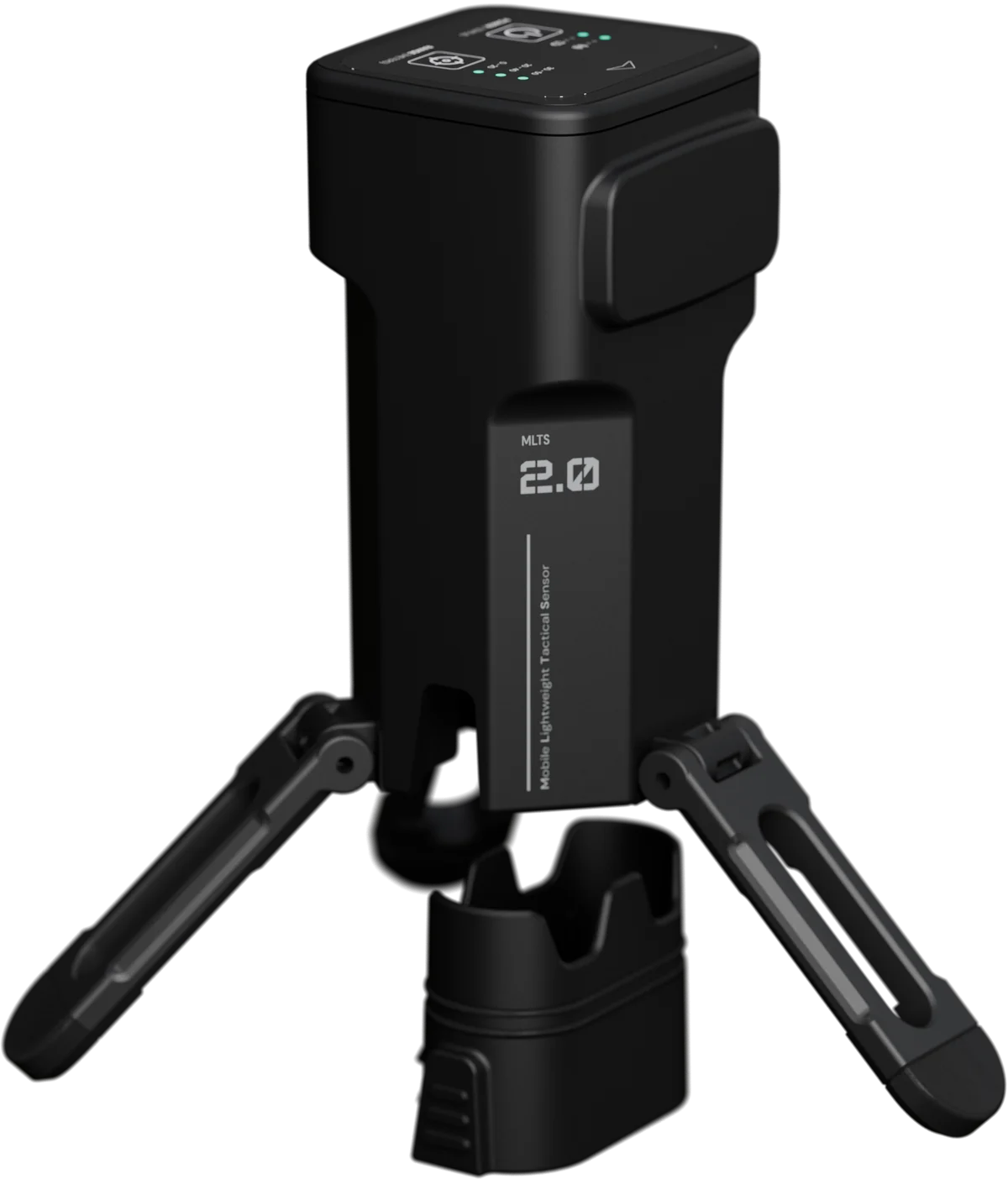
The MLTS with its battery module detached and floating below the body.
A hand pulling the battery pack out of the body of a printed prototype.The battery carrier beside its bare cell pack, labelled 7.2 V lithium thionyl chloride, 93 Wh.

03

Tactile interface

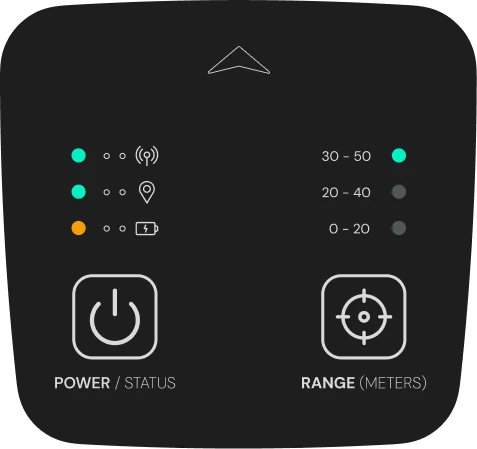
A custom membrane switch was developed to give a simple, sealed interface with minimal visual distraction during field operation. It replaces a set of separate buttons, wires and their seals from the previous prototype with everything printed in one layer, which is what makes the top of the device as small as it is.

The result is tactile, from the metal domes, as well as visual. I designed the graphics and the corresponding user flow and feedback in collaboration with the mechanical and electronics team. Together we arrived at a clean, integrated interface.

The membrane interface seen from above: status, connection and battery lights on the left, three range settings on the right, and two sealed buttons below.

Interface panel

Designed for assembly

The shape, and the way it is split into parts, revolve around the assembly. As I got an overview of the components, it was important to make the assembly possible and keep the right wires reachable at each step. At the same time the aim was to make production efficient and reduce the bill of materials, for example by using the same screws and bits throughout. Unfortunately I cannot describe the assembly sequence or show all the internal components, as it is confidential.

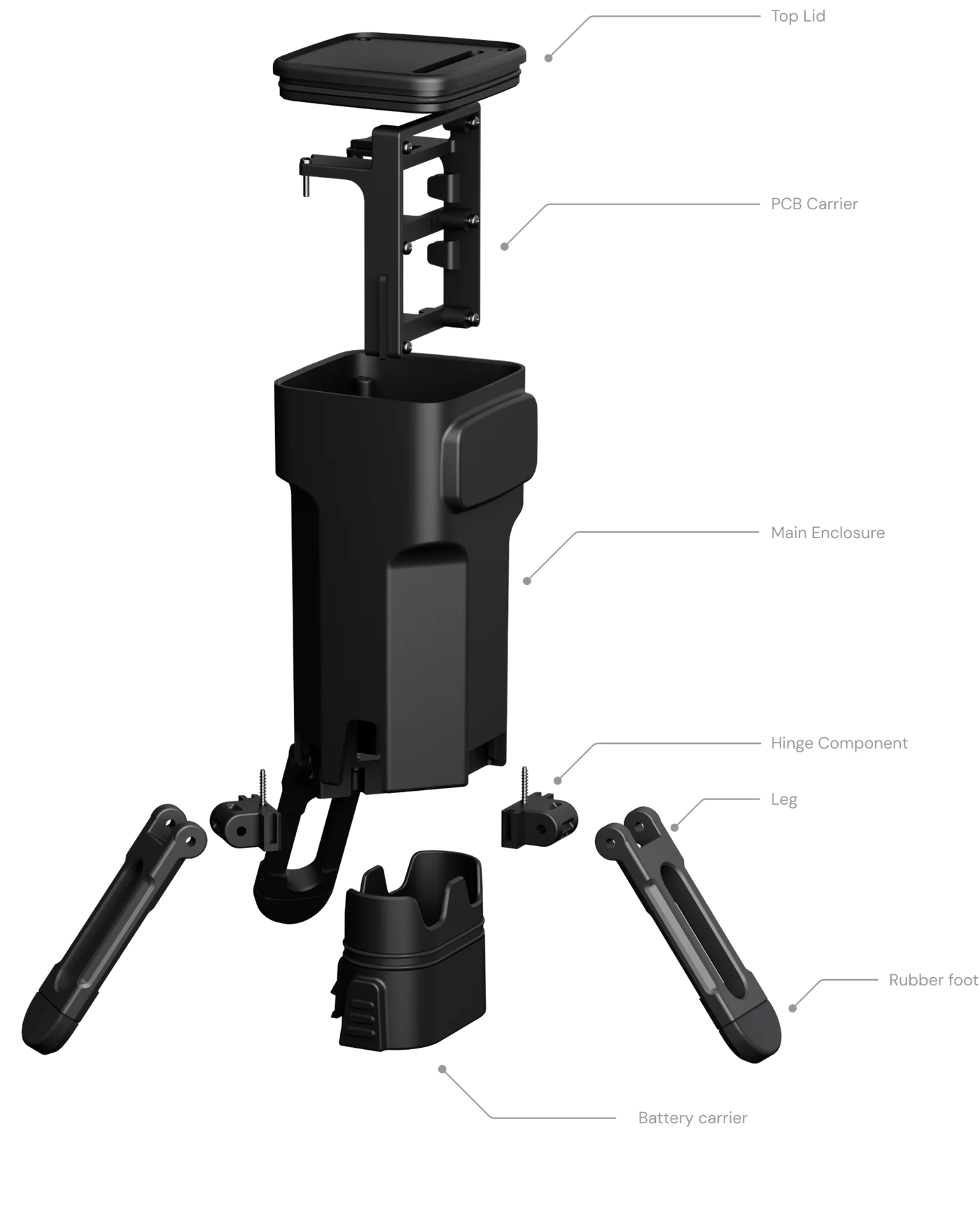
The MLTS exploded along its axis and labelled: top lid, PCB carrier, main enclosure, hinge component, leg, rubber foot and battery carrier.

Prototyping

We had printed prototypes made for testing, but the parts are also designed for injection moulding, with draft angles and tolerances. The prototypes were printed in SLA and MJF, chosen part by part: SLA where a surface had to seal and meet the o-rings, MJF where a part had to be tough enough to be handled and dropped.

There is a lot of feedback to take from this project and this prototype into the next iteration.

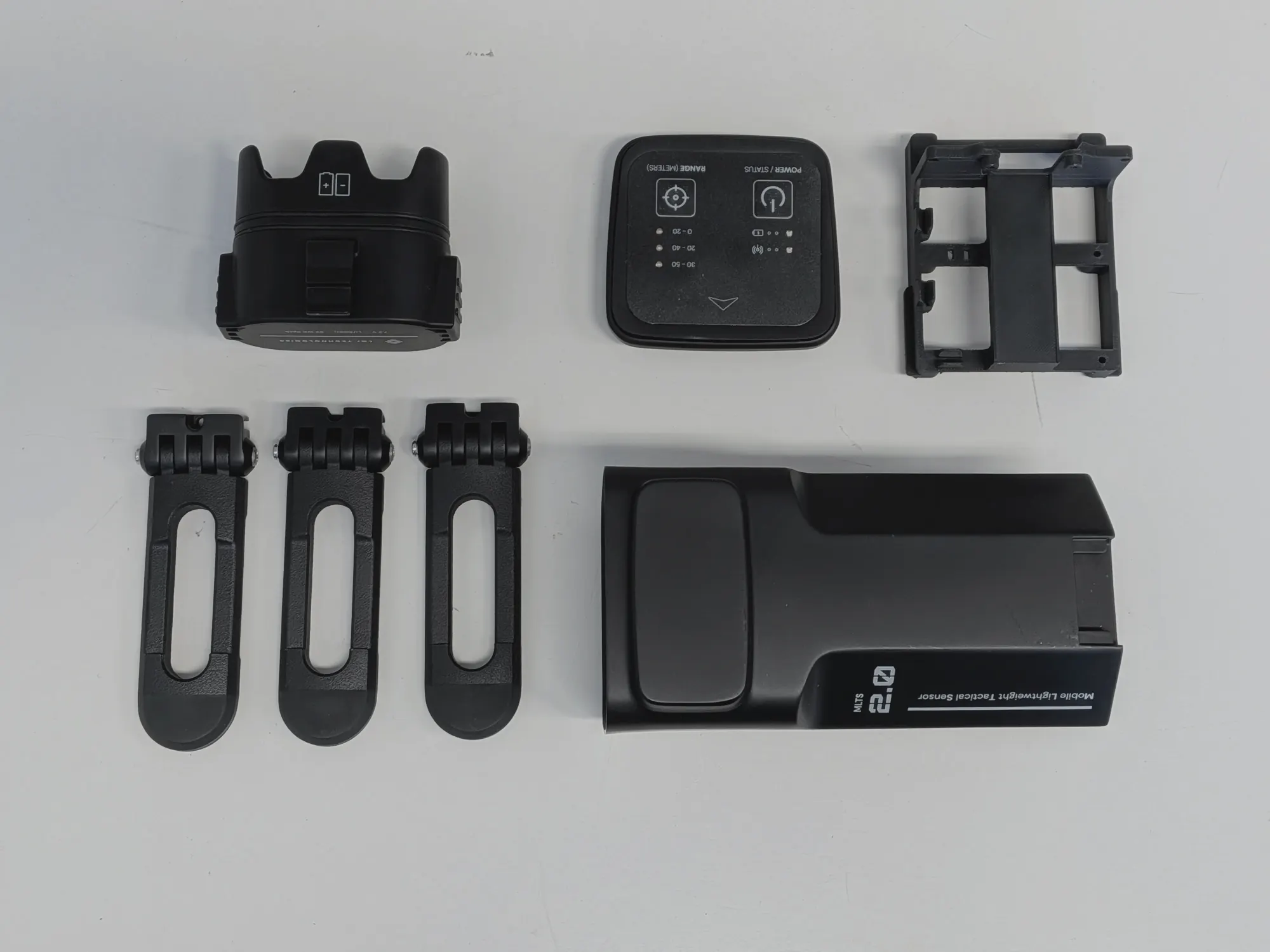
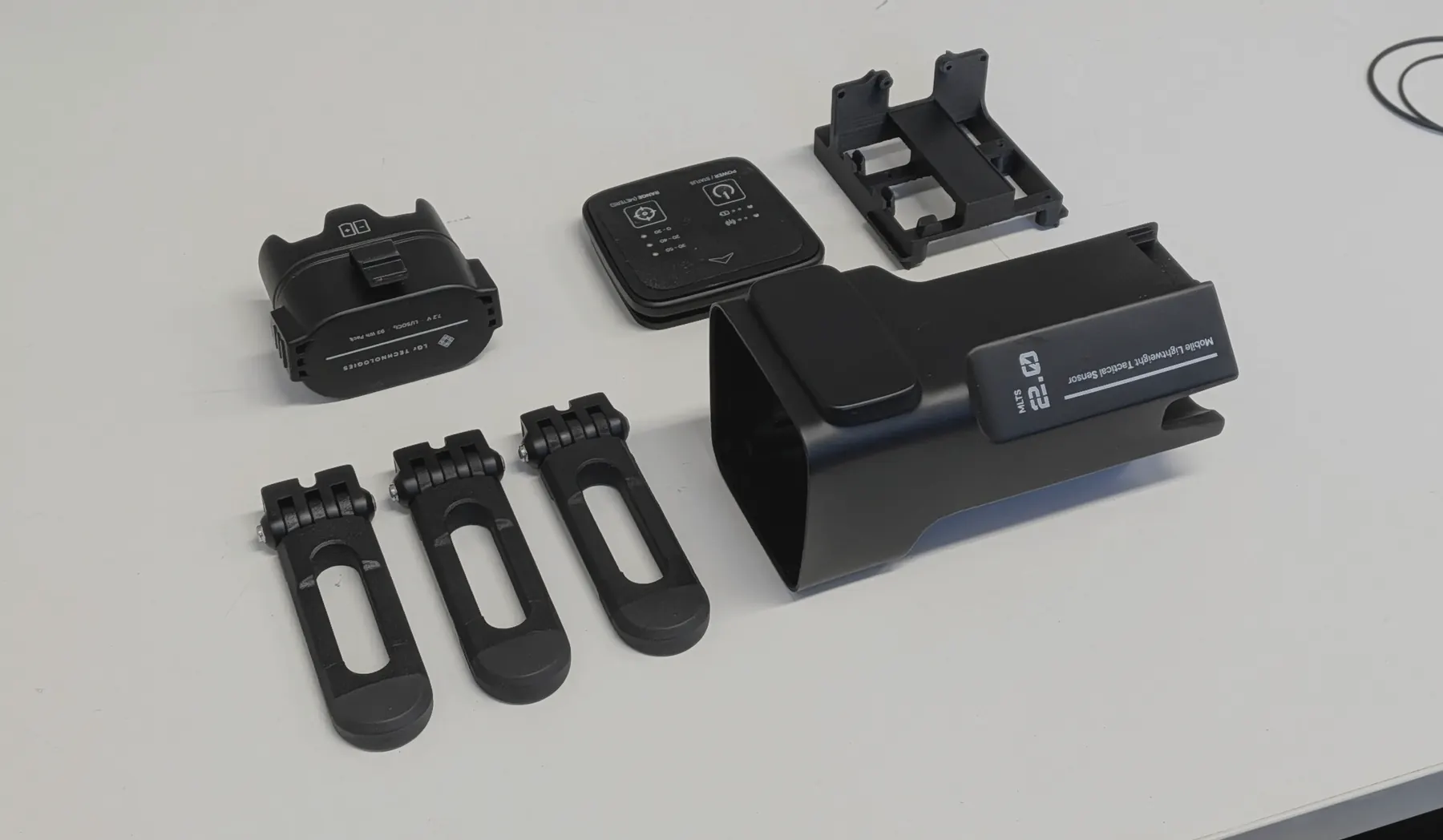
Every part of the prototype laid out: battery, top panel, internal chassis, three legs and the main housing.
The same set of printed parts seen at an angle.Bench detail: the hinge, the threaded vent plug and the circular connector on the housing.
A unit strapped to a deciduous tree in woodland.A unit strapped to a downpipe on a building, a second unit standing on the ground below.A unit standing on its legs on concrete beside its transport case.
LGR Technologies

Designed at LGR Technologies, with an amazing team. Thank you for the collaboration, the trust, and the insights along the way.