AERO
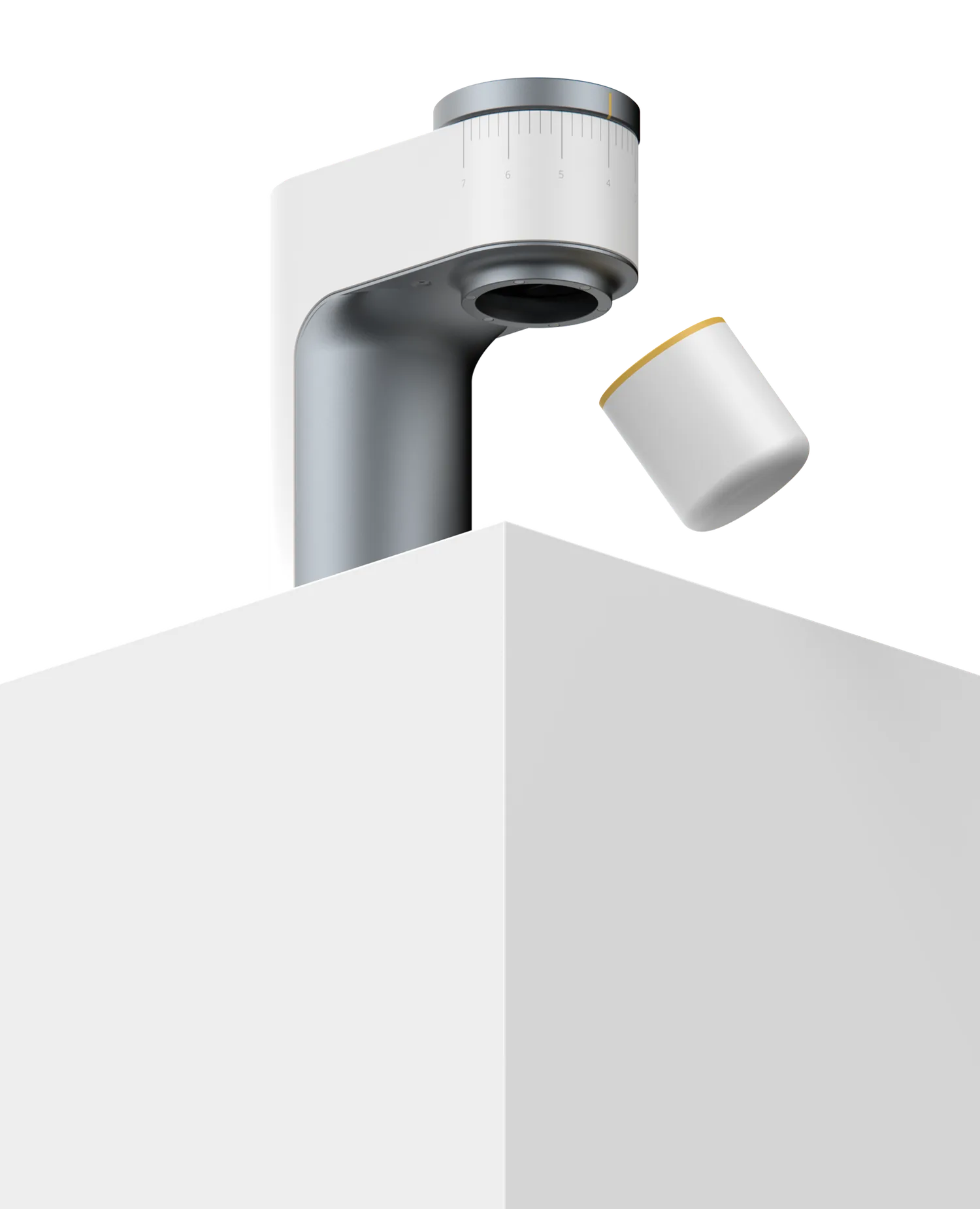
An espresso grinder, made for the course Design for Industrialization.
Tactile feedback
The dial runs on a custom detent mechanism, so grind size moves in physical steps you can feel and count rather than a smooth sweep you have to look at. The container comes away on magnets.
Interaction
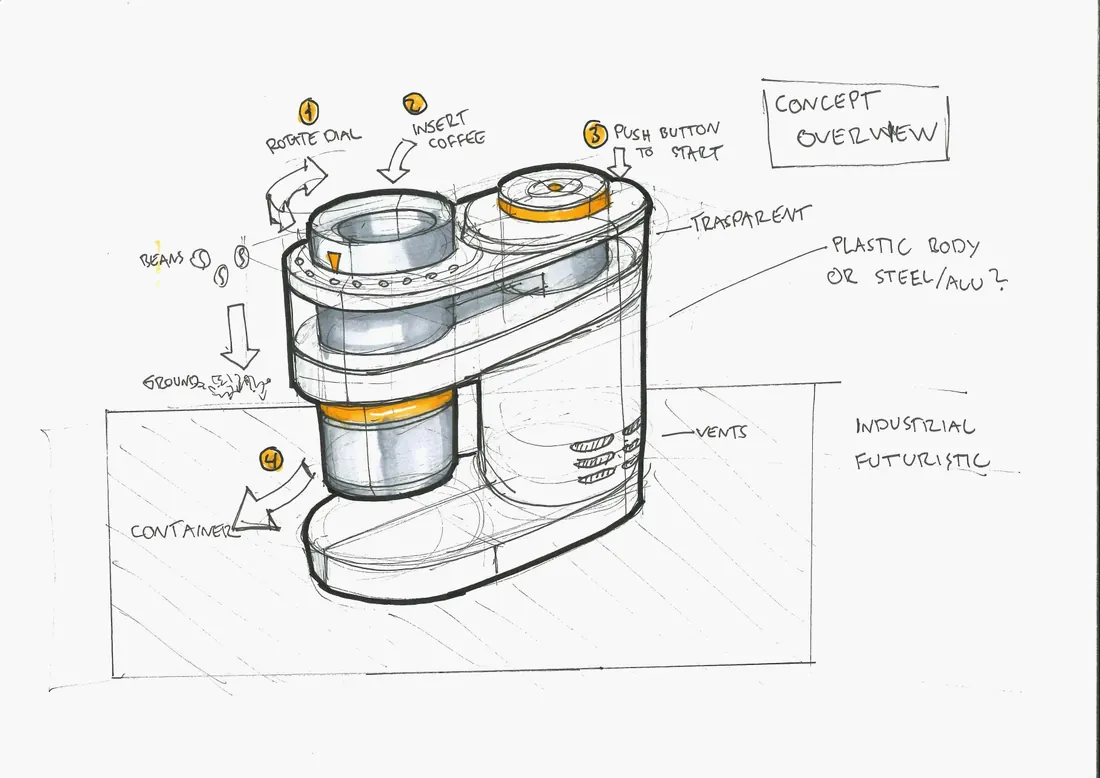
The process of grinding coffee beans is three simple steps.
- Insert coffee and adjustBeans in the funnel, grind size on the dial. The scale runs from espresso to filter.
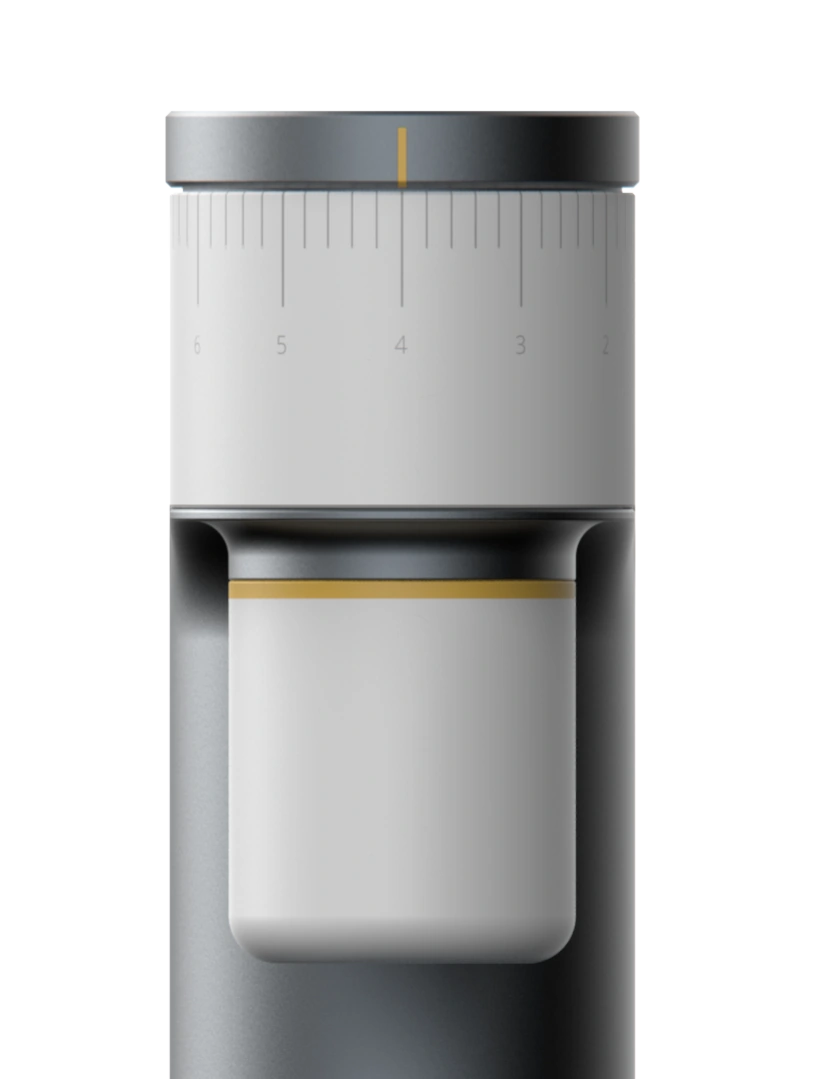
- Press startThe button runs the motor and rises again when the grind is done.
- CollectThe container lifts straight off its magnets. Nothing to twist or line up.
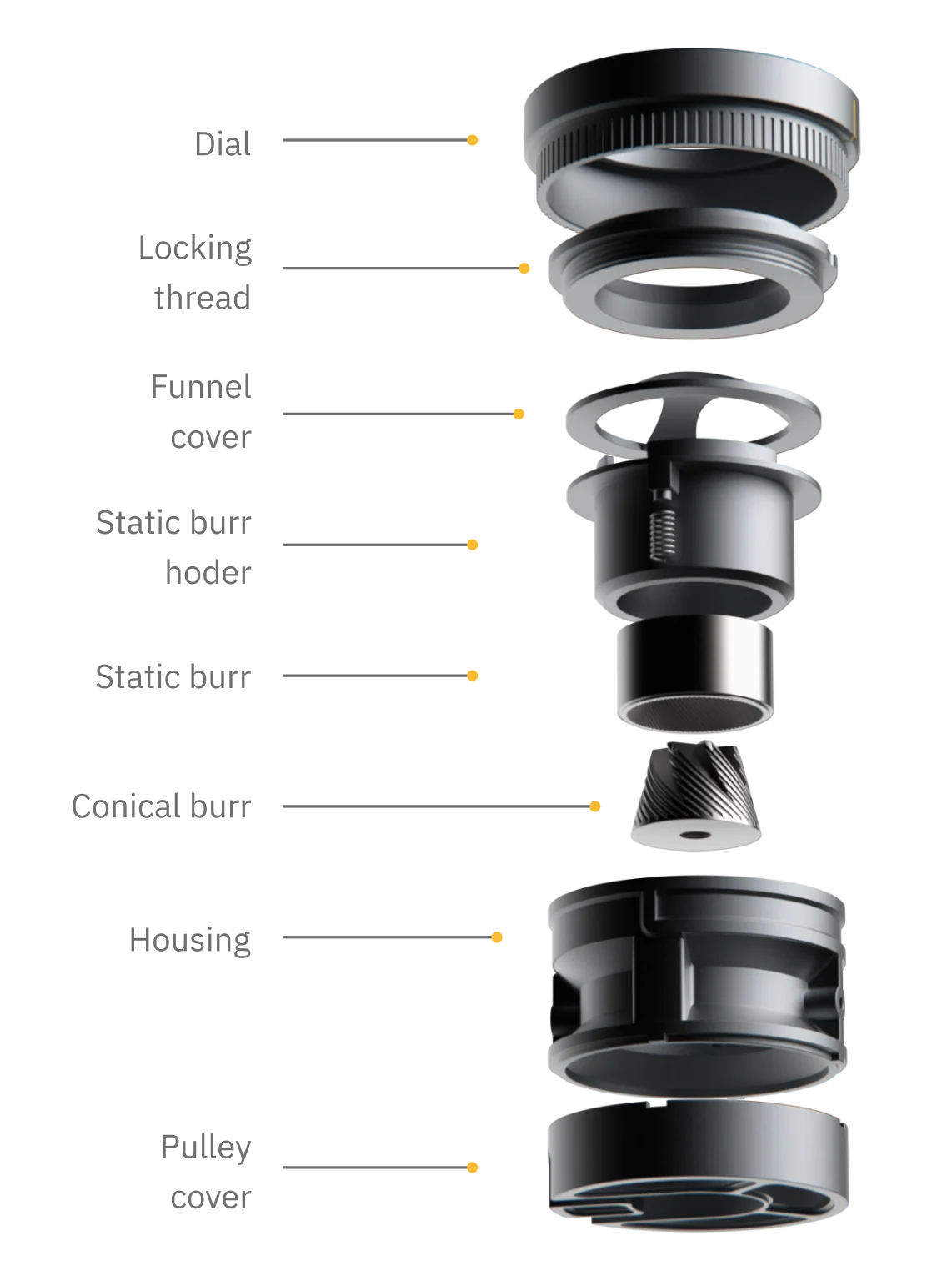
A conical burr, belt driven
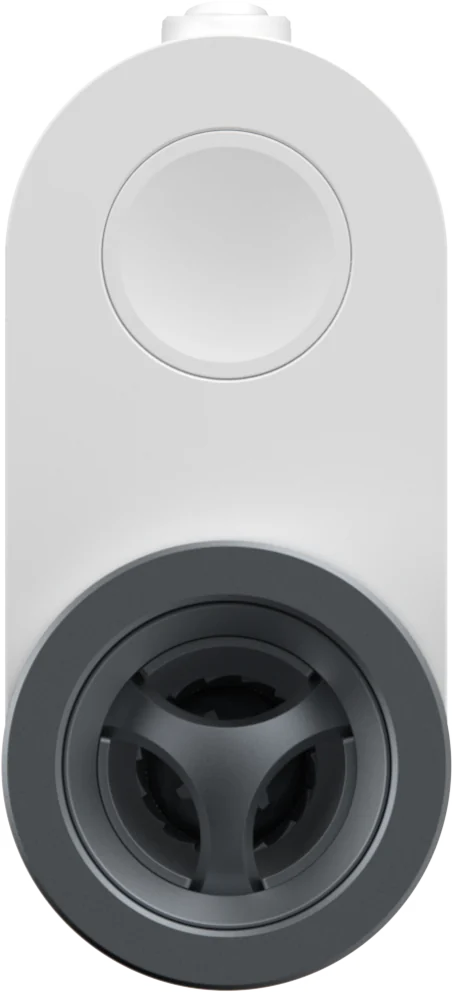
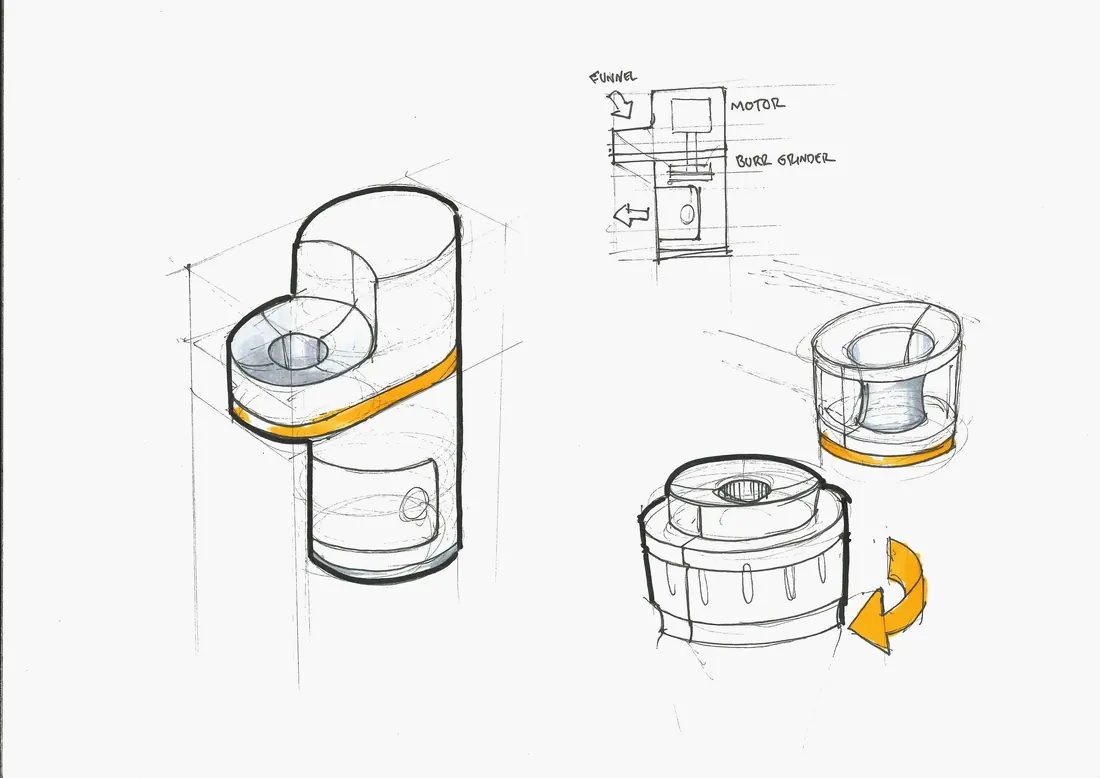
A conical burr set, turned by a motor through a belt. Turning the dial moves the burrs closer or further apart, which sets the grind.
Process
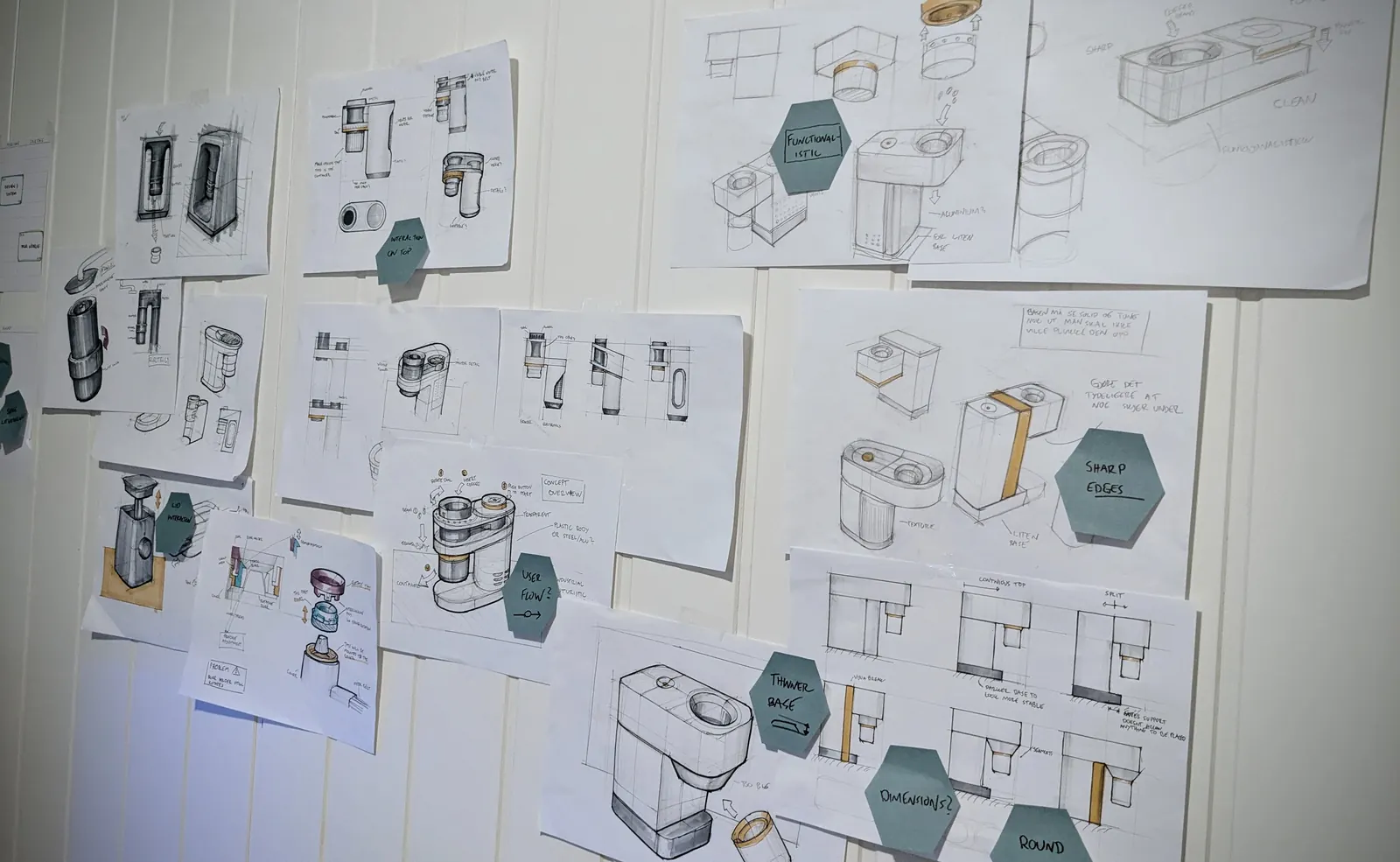
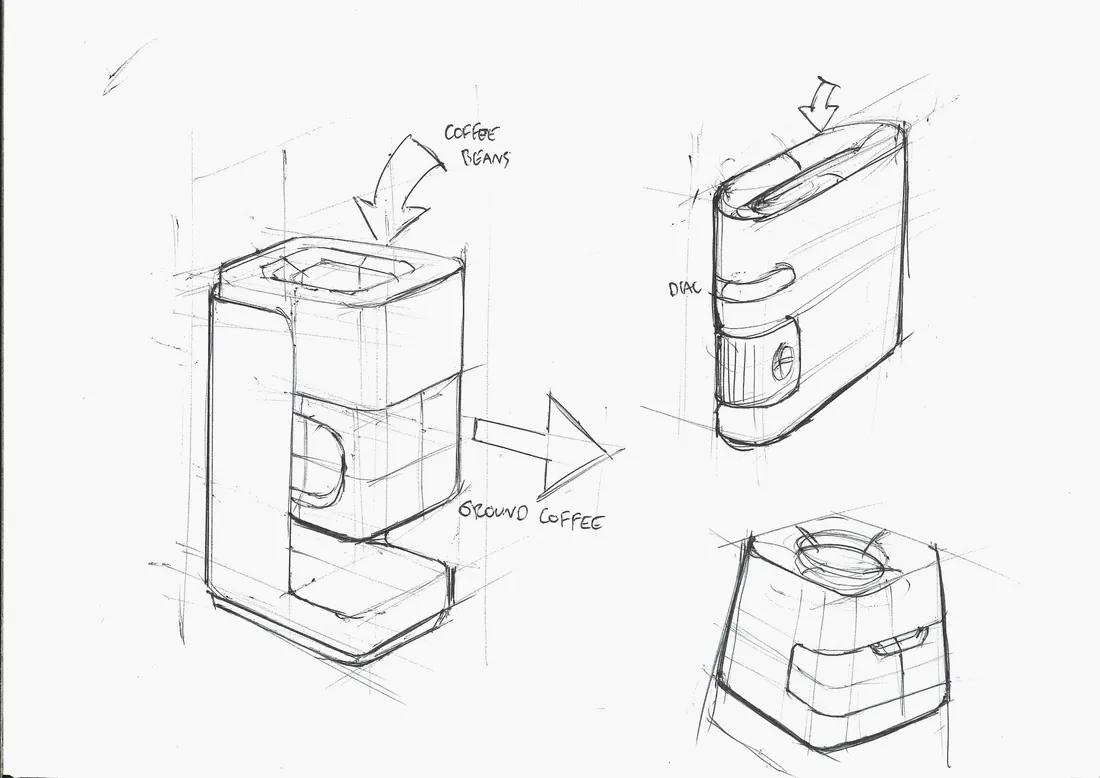
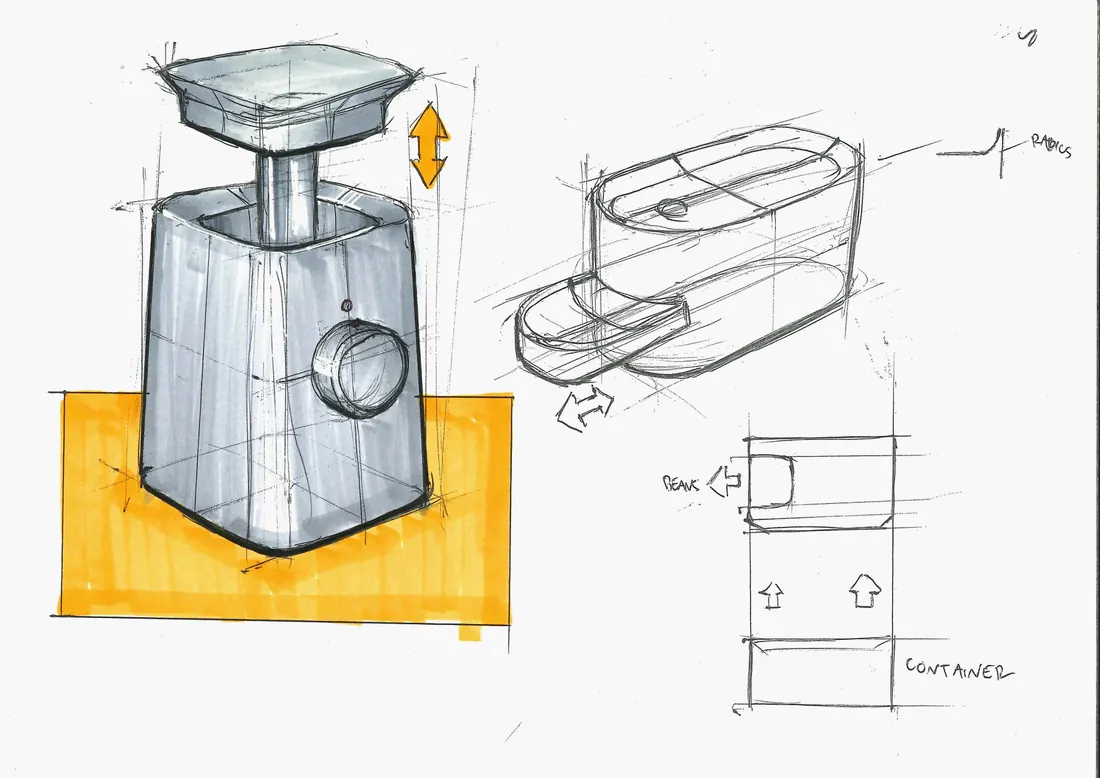
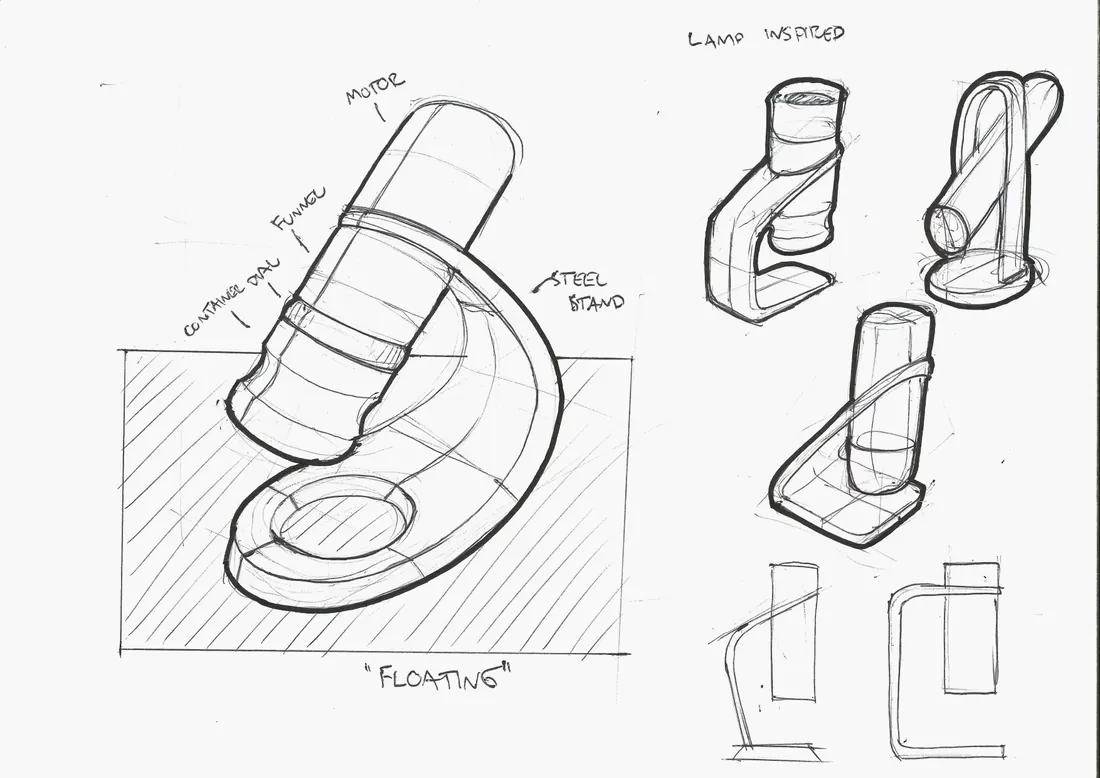
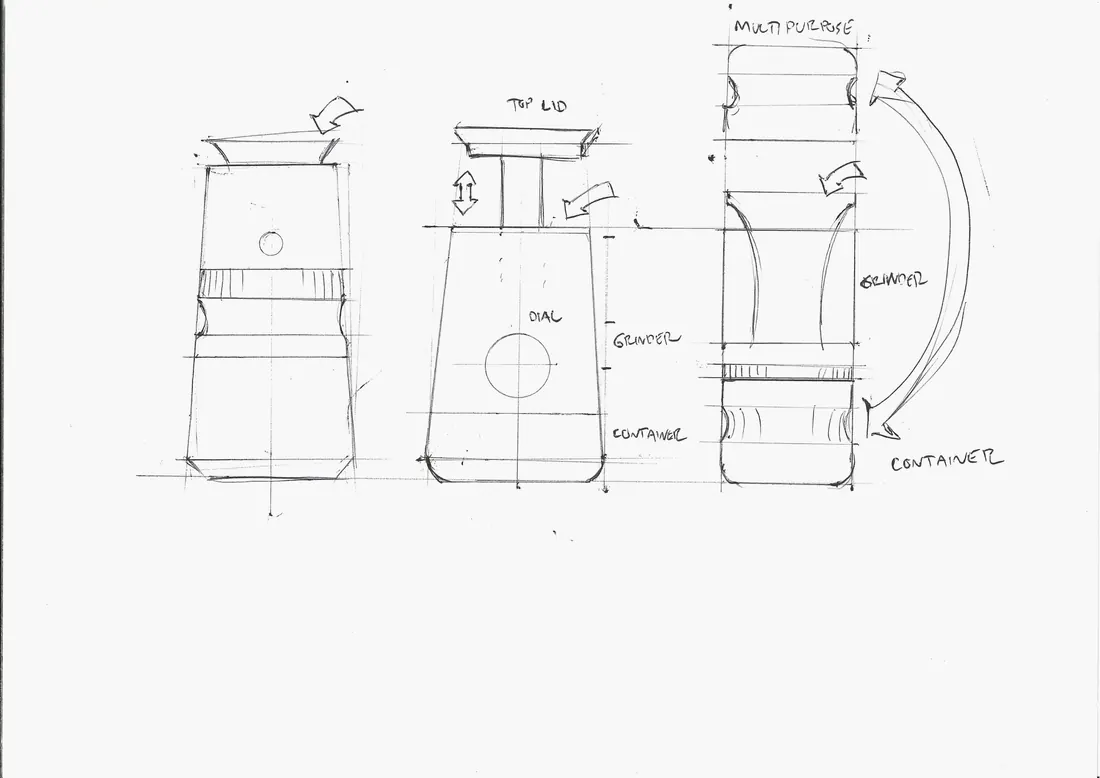
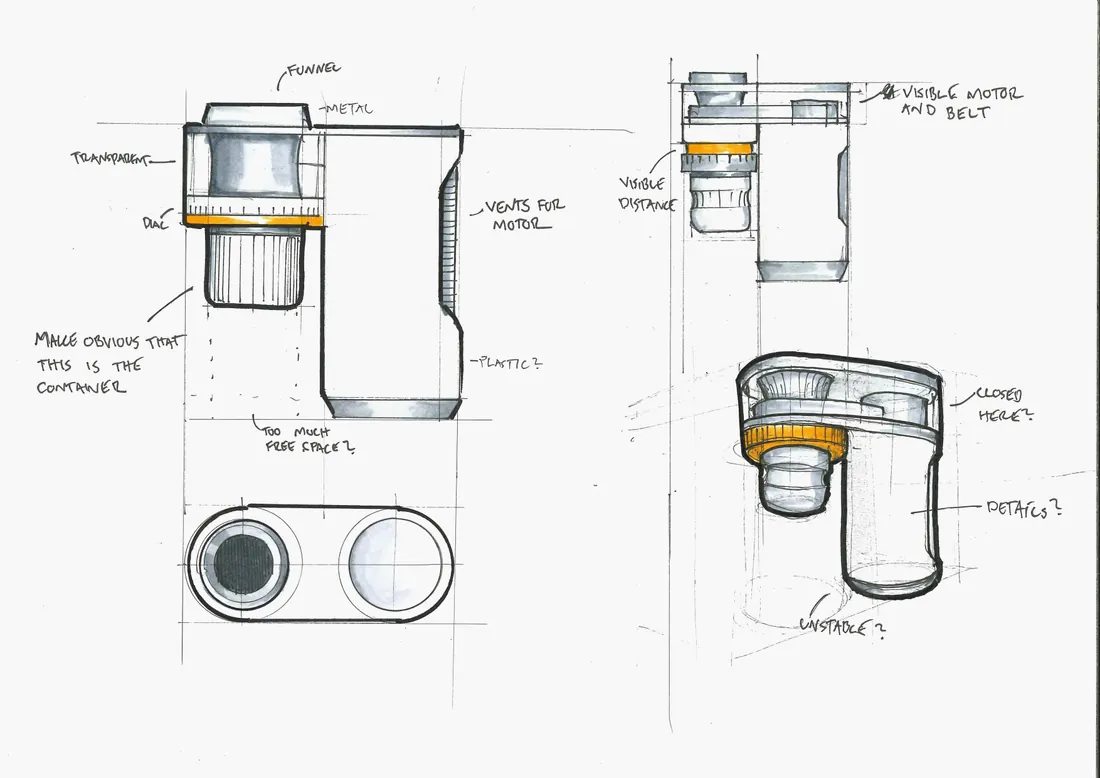
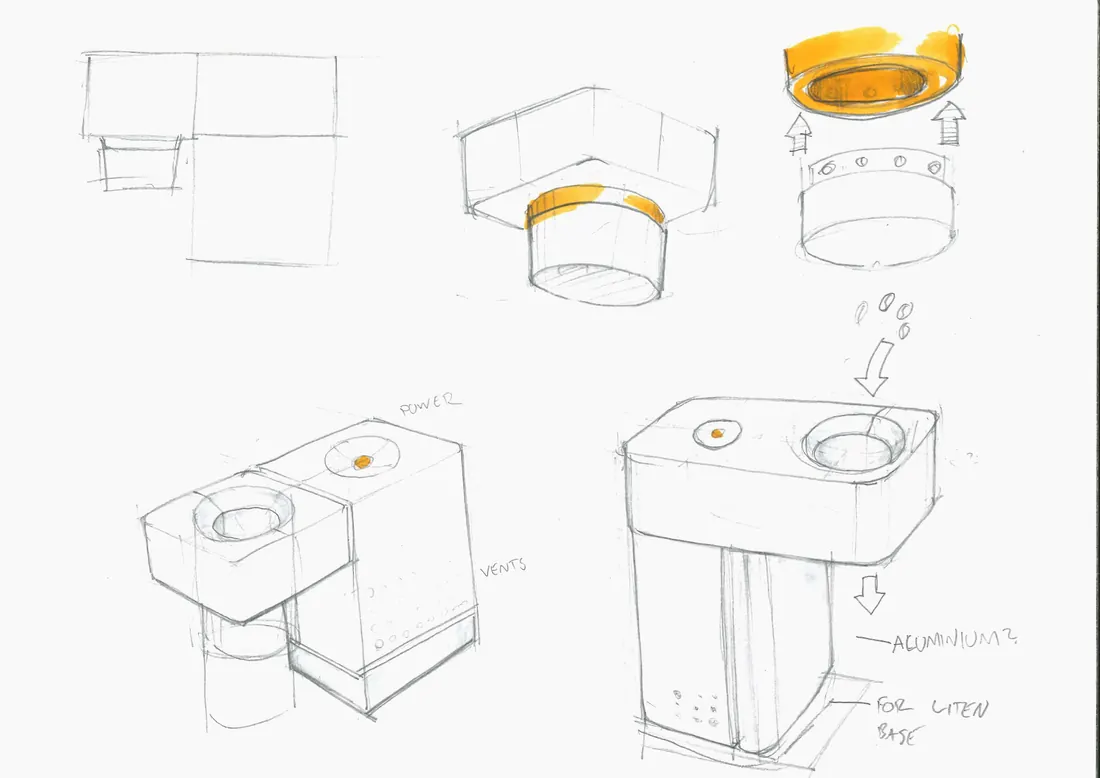
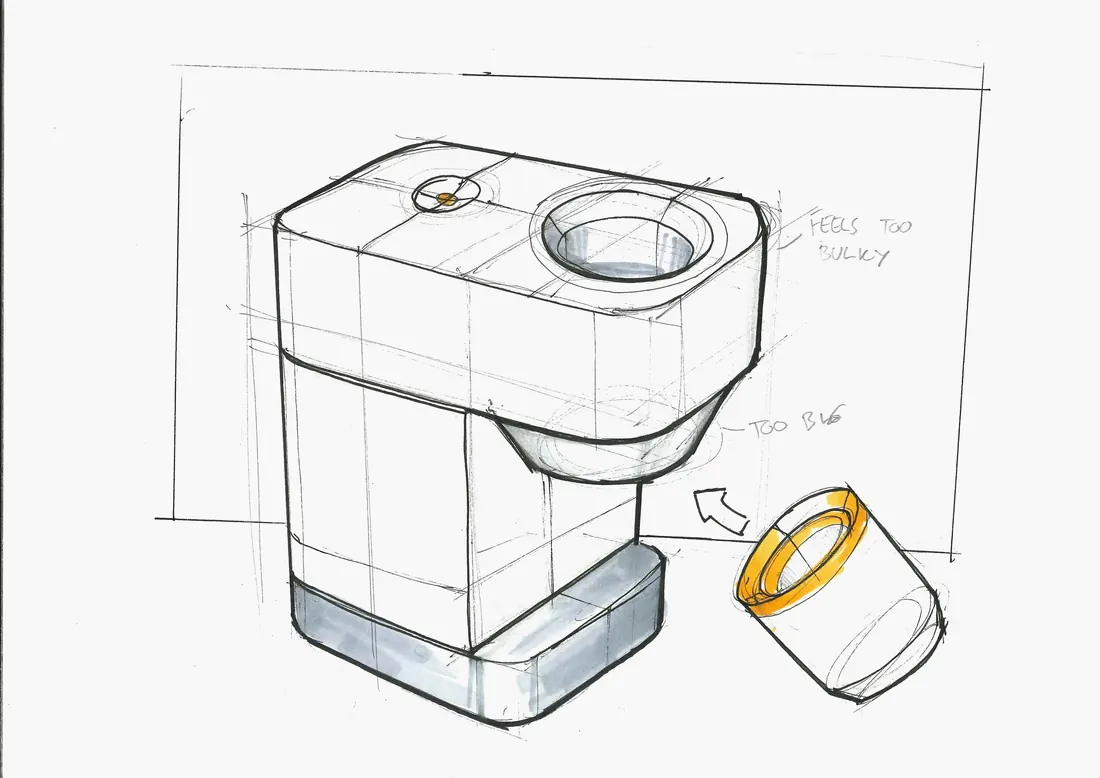
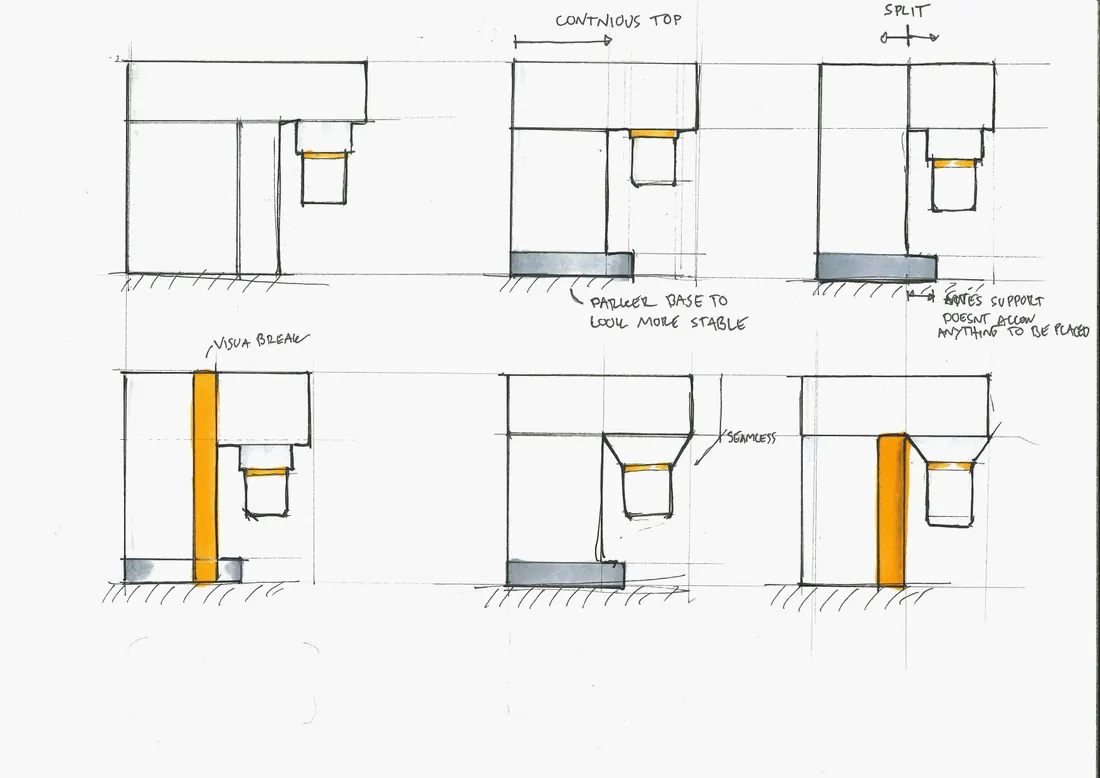
It started as a form study and an interaction study: where the beans go in, where the grounds come out, how much of the mechanism to show.
Alongside it I worked the problem technically, to find how the components and materials would shape the object. The two had to run together, since every form was only worth drawing if it could hold a motor and a burr set.
Early on I explored letting the mechanism show through the body, in the way Nothing does. Over time it moved towards a more traditional functionalist look, with clean lines and curves that follow the form.
Designed for industrialization
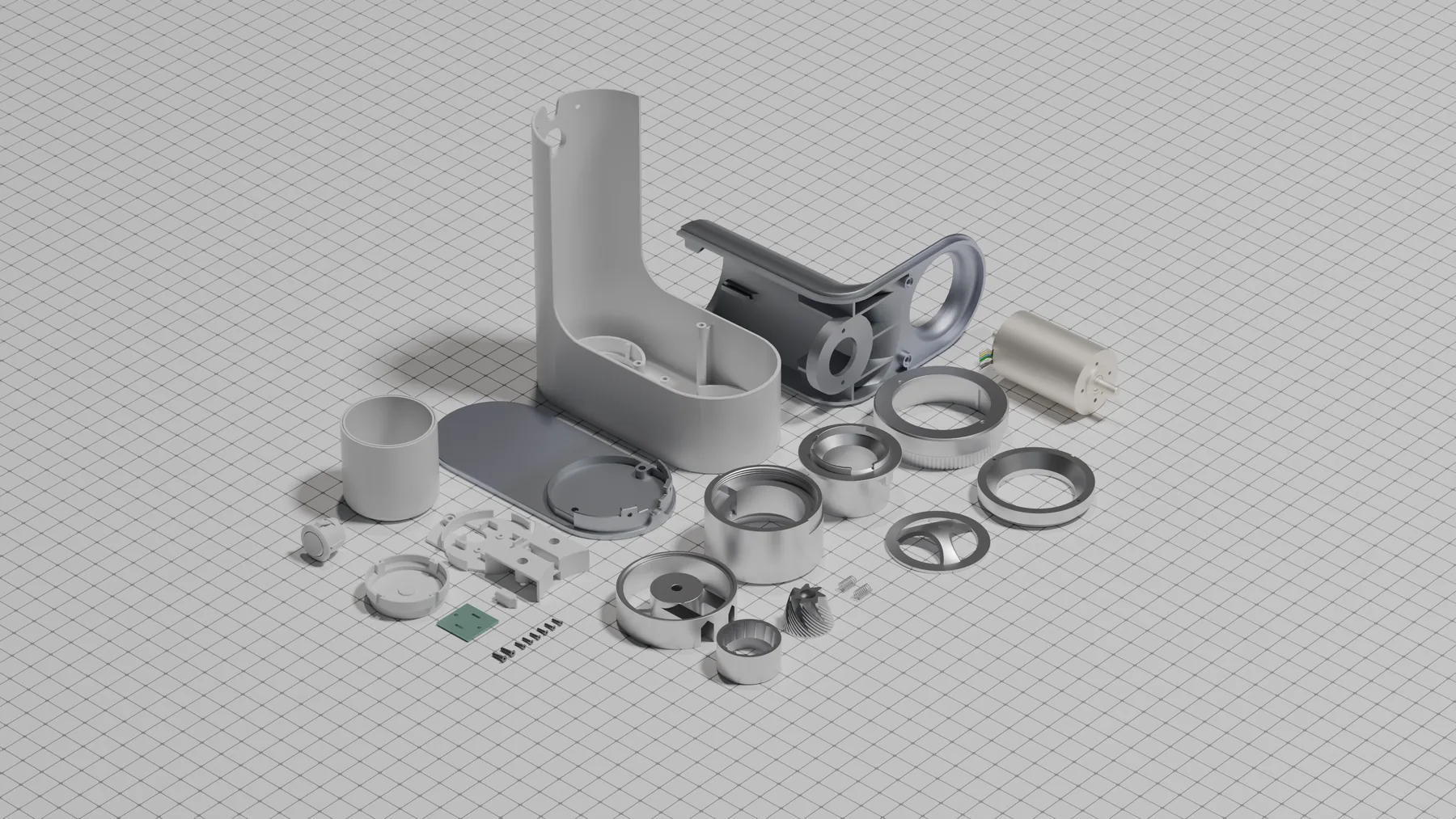
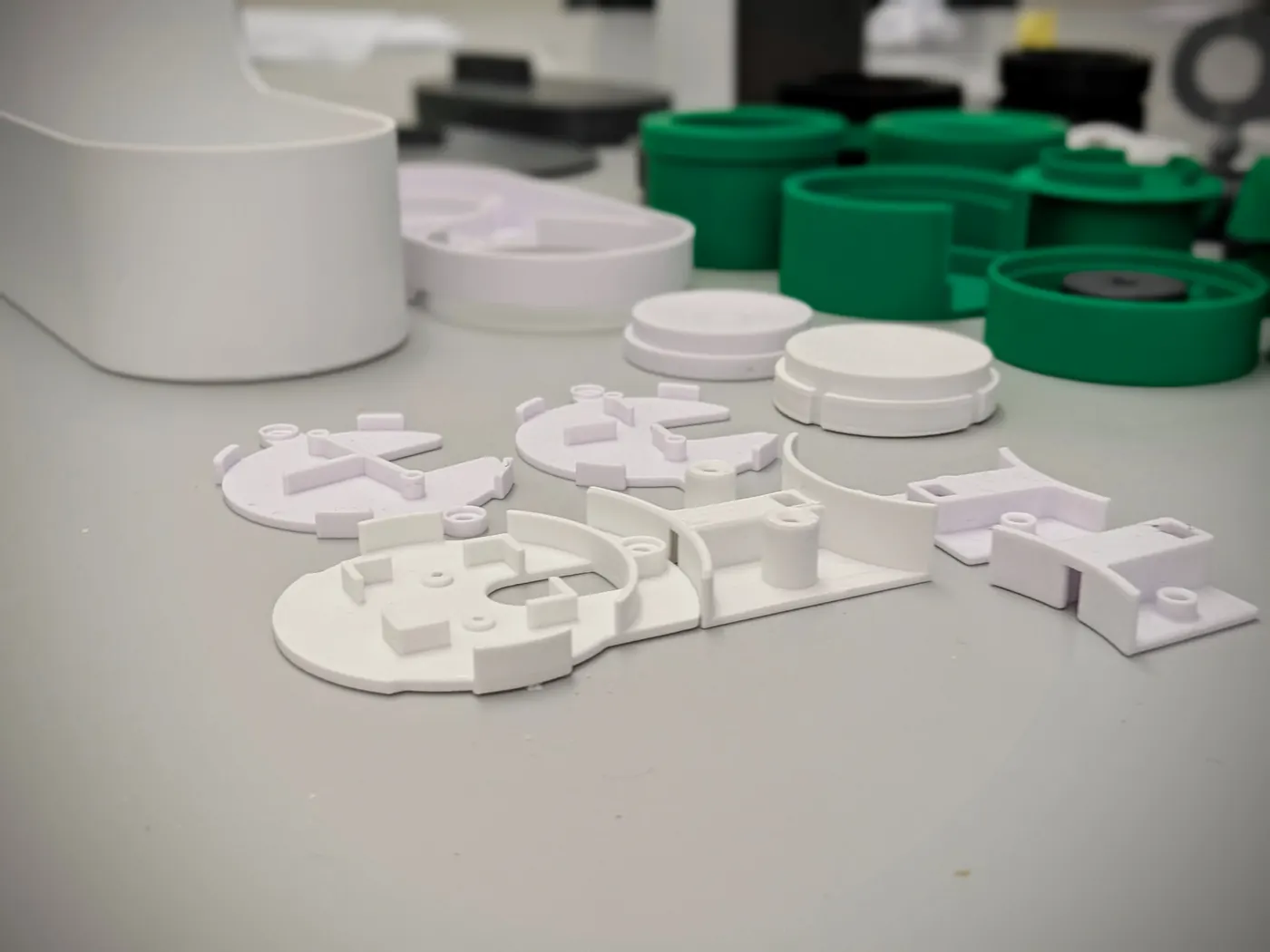
Drawn around its production and its components. The die-cast housing carries both the motor and the burr assembly, so it holds the tolerance between them, and a correct casting leaves the assembly square with no adjustment. The plastic shell only has to enclose the electronics.
The service lid does two jobs: it carries the graphic and clamps the mechanism and dial in place. The rest of the work was the ordinary business of making a part manufacturable at all, through uniform wall thickness, overmoulding, magnets instead of threads, and geometry that locks each part in one position rather than trusting the assembler.